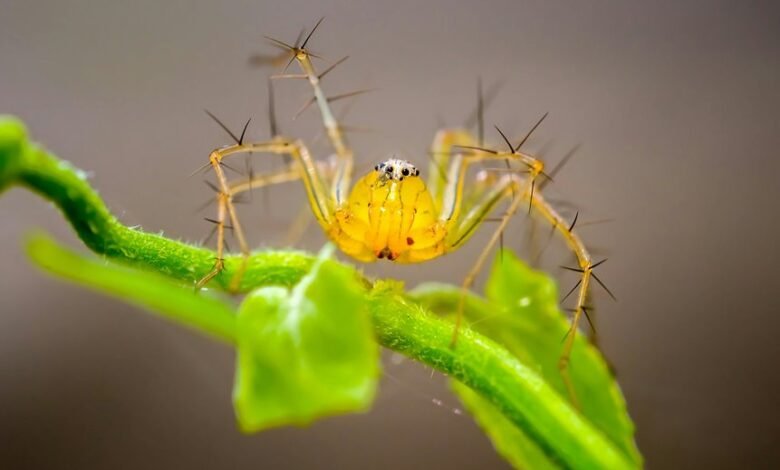
The funnel-web spider, Atrax robustus, stands out as the world’s most poisonous spider. Its potent neurotoxic venom and formidable fangs contribute to its reputation. Primarily found in southeastern Australia, particularly New South Wales, this spider employs various hunting methods. Common assumptions about its aggressiveness towards humans often overshadow its true nature. Understanding its ecological role and behaviors may reveal deeper insights into this complex creature’s existence.
Characteristics of the World’s Most Poisonous Spider
The characteristics of the world’s most poisonous spider, commonly identified as the funnel-web spider (Atrax robustus), reveal a complex interplay of morphology and venom composition that enhances its predatory efficiency.
Its spider anatomy features robust fangs capable of delivering potent neurotoxins, paralyzing prey rapidly.
The intricate structure of its venom, rich in a variety of proteins, facilitates effective incapacitation, ensuring survival and reproductive success.
Habitat and Distribution
Funnel-web spiders (Atrax robustus) predominantly inhabit the temperate regions of southeastern Australia, particularly thriving in moist, sheltered environments such as forests and woodlands.
Their geographical range is primarily confined to New South Wales, where various habitat types support their survival.
These spiders favor microhabitats that offer protection from desiccation and predation, ensuring optimal conditions for their reproductive and developmental processes.
Hunting Techniques and Behavior
Employing a combination of ambush and active hunting strategies, funnel-web spiders exhibit highly specialized predatory behavior.
Their web weaving serves both as a trap and a hunting ground, facilitating efficient prey capture.
Myths and Misconceptions
What common beliefs surround the world’s most poisonous spiders, and how do they often distort public perception?
Numerous common myths perpetuate the notion that these spiders are aggressive toward humans, when in fact, most are reclusive.
Such spider misconceptions amplify fear and misunderstanding, overshadowing the ecological roles these creatures play.
Accurate information is vital for fostering appreciation rather than dread of these fascinating arachnids.
Conclusion
In summary, the funnel-web spider (Atrax robustus) exemplifies a complex interplay of lethal characteristics and ecological significance. While its venom may pose a grave threat to humans, it remains a vital predator within its ecosystem, controlling insect populations and maintaining ecological balance. Dispelling myths surrounding its behavior reveals that this spider is more likely to retreat than attack. Ultimately, understanding the funnel-web spider underscores the importance of appreciating nature’s intricacies, reminding us that not all that glitters is gold.